
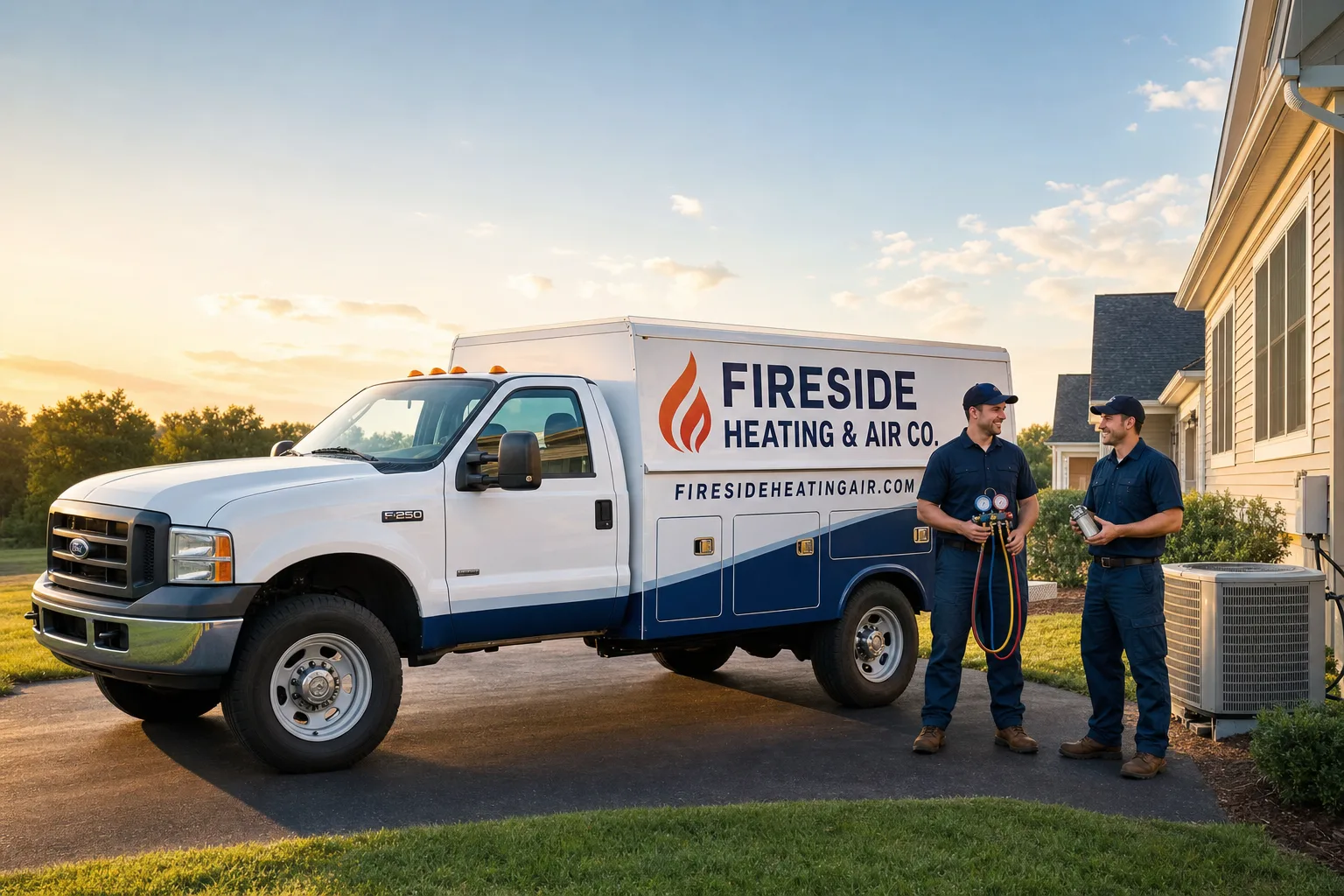
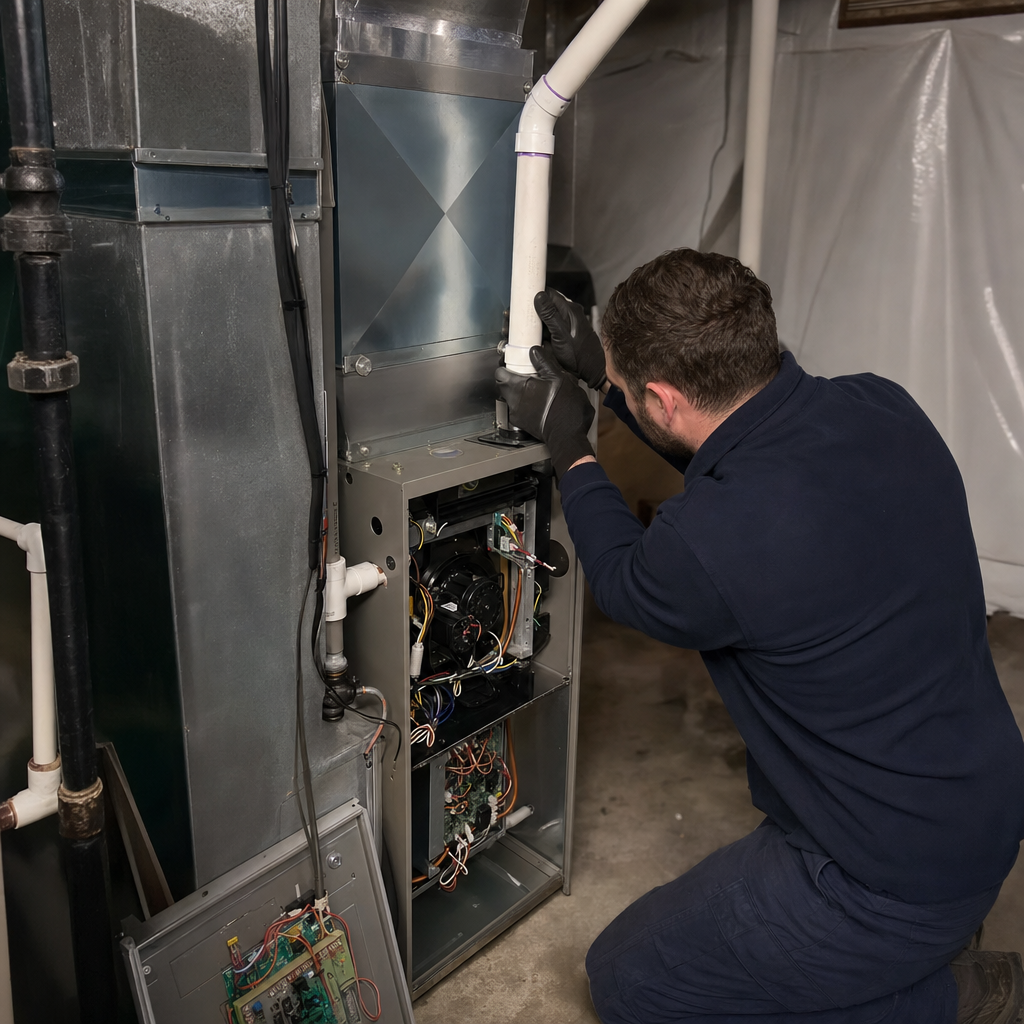
Fast, Reliable Emergency & Commercial HVAC Across Washington, D.C.
When your rooftop unit tears loose in a summer derecho or your rowhouse boiler quits on the coldest night in January, you need a crew that knows Washington, D.C.’s buildings, its codes, and its weather. Fireside Heating & Air Co. answers every call with a live person, 24 hours a day, and dispatches technicians who understand the unique demands of pre-1940s brick rowhouses, HPRB historic districts, and the river-basin humidity that punishes undersized systems here. We’ve spent over 8 years serving communities with the same steady, plainspoken approach: diagnose the problem, quote the price upfront, and fix it right. Call (866) 561-3358 for emergency service or a free estimate anywhere in Washington, D.C.
Why Fireside Heating & Air Co. Is Washington, D.C.’s Preferred Emergency & Commercial HVAC Company
Our reputation in Washington, D.C. was built one rowhouse at a time. Homeowners from Capitol Hill to Petworth call us back because we treat their homes the way we would our own mother’s - shoe covers on, no shortcuts, and every job backed by our 90-Day Done Right Promise in writing.
We don’t use voicemail trees. A live person answers every call, including the 2 a.m. emergencies when your heat pump ices over or your chiller fails before a holiday weekend. Our technicians are background-checked, uniformed journeymen trained on nine major brands including Rheem, York, and Daikin. Most repairs are completed in a single visit.
What sets us apart in Washington, D.C. specifically is our familiarity with local regulatory hurdles. We know which blocks fall under HPRB review, how to route refrigerant lines through party walls without damaging historic fabric, and where DCRA inspectors focus their attention. That knowledge saves our customers stop-work orders, fines, and weeks of delay.
Our Emergency & Commercial HVAC Services in Washington, D.C.
24/7 Emergency HVAC
Washington, D.C.’s river-basin location creates brutal humidity spikes and sudden ice storms that push systems past their limits. Our emergency line - (866) 561-3358 - connects you to a live dispatcher who can have a technician en route to Capitol Hill, Shaw, or Logan Circle within the hour. We carry common parts for Rheem, York, Bryant, and Daikin units on every truck, so we’re not making a second trip while your building goes unconditioned.
Commercial HVAC
From mid-century apartment buildings along Connecticut Avenue to office conversions in Dupont Circle, commercial systems in Washington, D.C. face constraints their suburban counterparts never see. Limited mechanical room access, aging fan-coil infrastructure, and HPRB-mandated exterior screening all complicate equipment swaps. Our Emergency & Commercial HVAC team plans around these realities, sizing replacements that fit existing chases and meet current efficiency standards without triggering historic review.
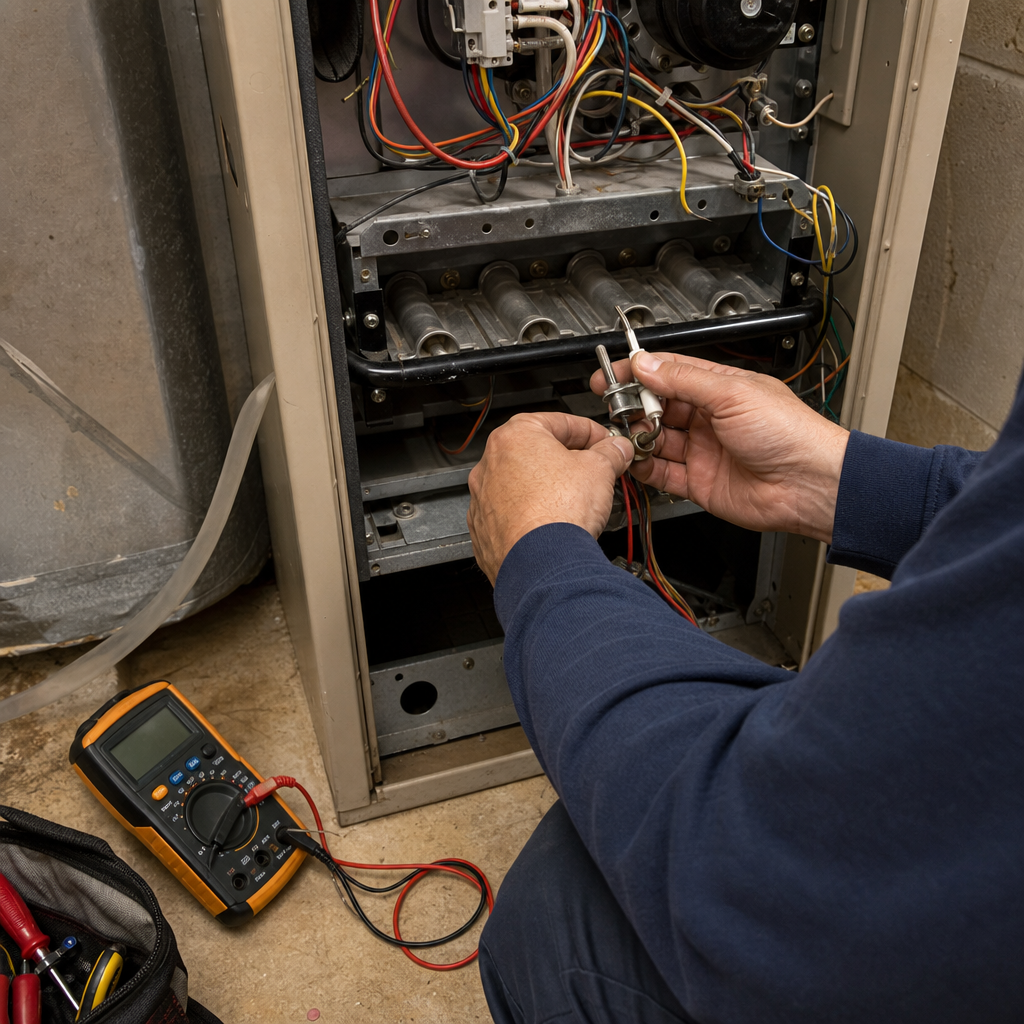
Rooftop Unit Service & Replacement
Rooftop units on Washington, D.C.’s low-rise commercial buildings and apartment structures take direct wind exposure with no suburban tree buffer. We install and service RTUs with wind-rated curb adapters and seismic restraints appropriate for the city’s gust patterns. Every mounting is engineered to withstand the 110-mph gusts that ripped through the region during the 2012 derecho and subsequent severe weather events.
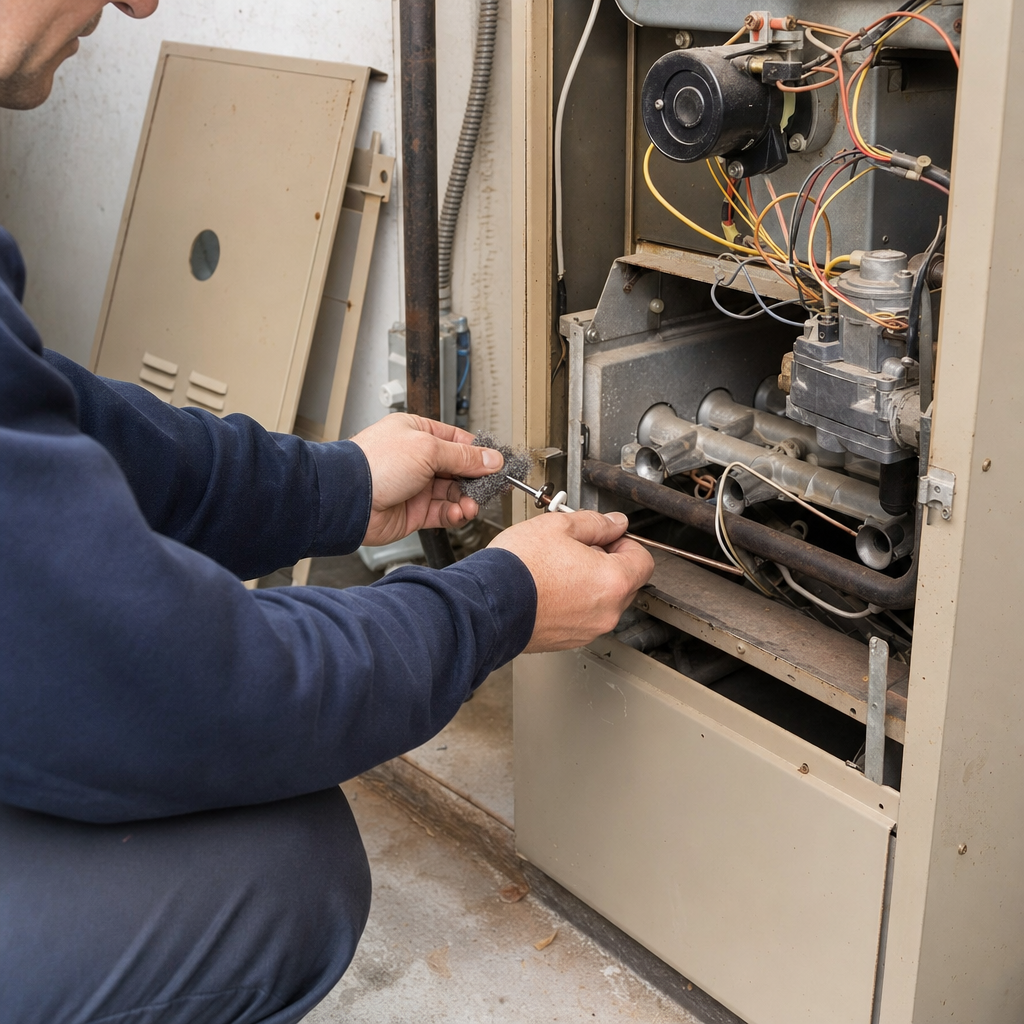
Chiller Service
Chillers serving larger commercial properties in Washington, D.C. operate under constant load during the humid summer months when dew points sit in the low-to-mid 70s°F for weeks at a stretch. We handle refrigerant recovery, tube cleaning, compressor rebuilds, and full replacements, with emergency protocols to keep critical systems online through heat emergencies.
Annual Maintenance & HVAC Inspection
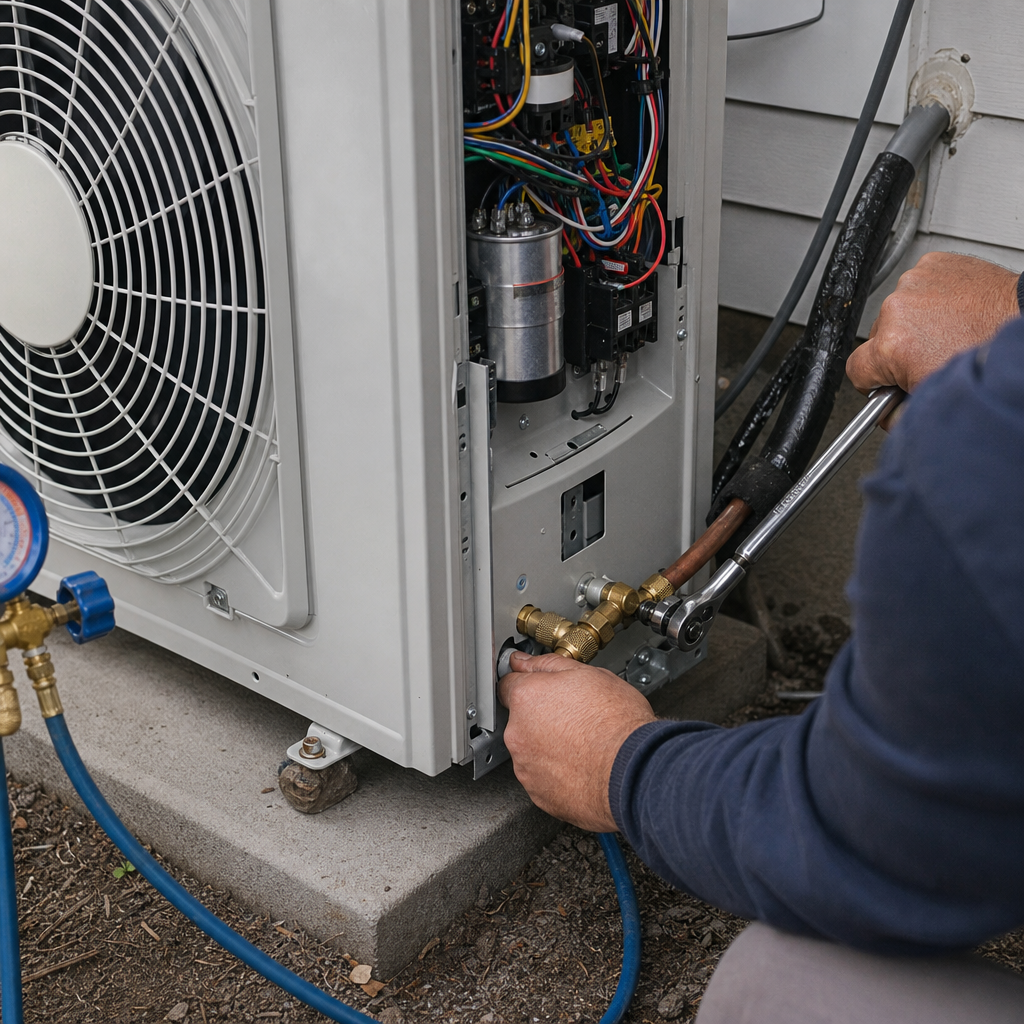
Our $89 Seasonal Tune-Up catches the refrigerant-line corrosion and condensate drain blockages that are common in Washington, D.C.’s brick rowhouses before they become emergency calls. Inspections include electrical testing, airflow measurement, and written documentation of any HPRB-visible equipment that may need compliance review before replacement.
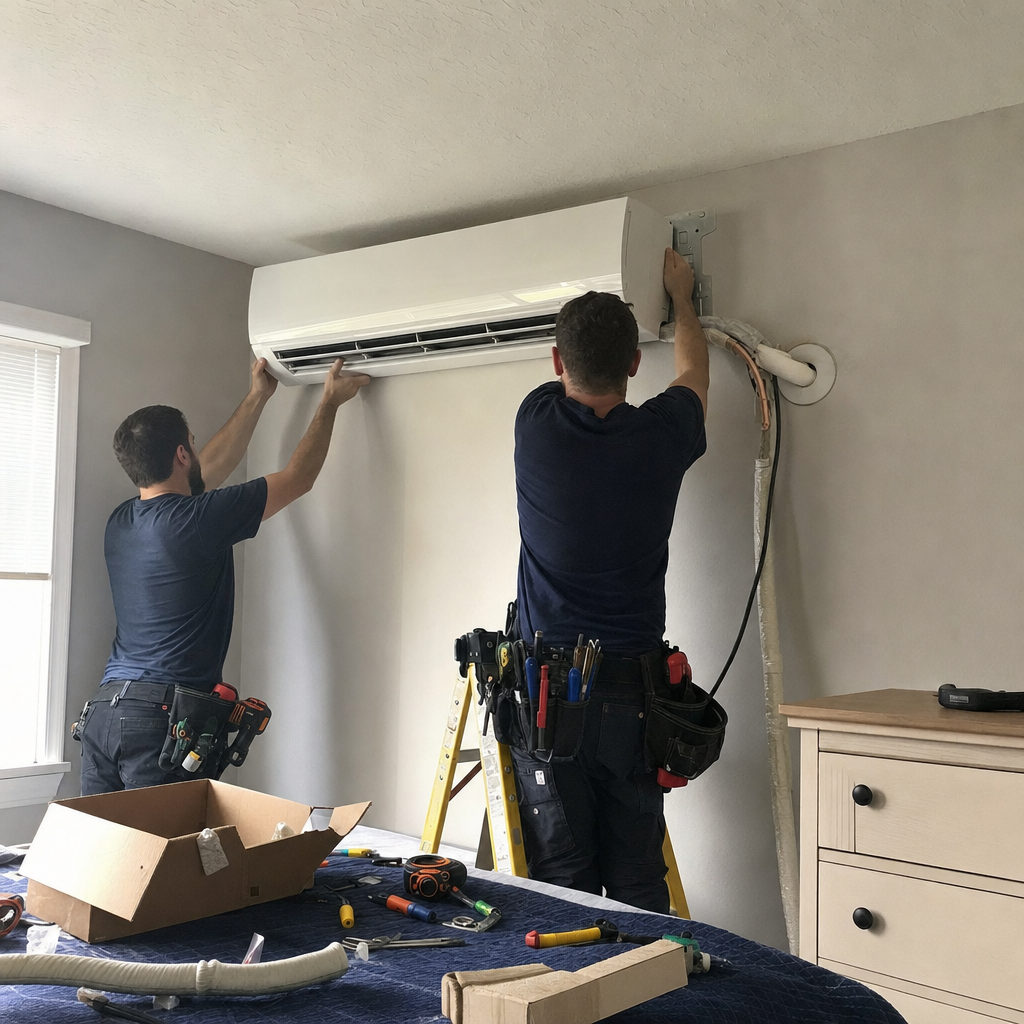
What happens when you call
- 1
A real person answersNo phone trees - you reach a local pro.
- 2
You get an upfront price rangeHonest numbers before anyone is dispatched.
- 3
A background-checked tech heads outLicensed & insured, dispatched right away.
- 4
You approve before work beginsNothing starts until you say go.
Trusted Brands We Service in Washington, D.C.
We maintain factory-authorized training and local parts inventory for Rheem, York, Daikin, and Bryant - four of the nine major brands most commonly found in Washington, D.C.’s mixed housing stock. Rheem and York equipment appears frequently in the mid-century apartment buildings from the 1940s-1960s; Daikin mini-splits have become the go-to solution for rowhouse retrofits where ductwork is impossible; Bryant systems dominate many of the 1980s-1990s condo conversions. Because we stock components locally rather than ordering from a regional warehouse, most Washington, D.C. customers see same-day resolution instead of multi-day delays.
Common Emergency & Commercial HVAC Problems We See in Washington, D.C. Homes
- Condensing units on roofs or front facades fail wind-load ratings or violate HPRB visibility rules, triggering fines. In D.C.’s many HPRB-designated historic districts, a contractor cannot simply mount a condensing unit on the front facade or roof parapet visible from a public street. Violation can trigger stop-work orders and fines from DCRA. Experienced local techs have developed standard workarounds like rear-alley condenser placement or courtyard-hidden mini-split heads that a technician trained in suburban Maryland or Virginia would never have needed to learn.
- Pre-1940s rowhouse brick party walls absorb moisture, causing refrigerant-line corrosion and leaks during ice storms. Washington, D.C.’s frequent ice-storm cycles, rather than heavy snow, create freeze-thaw conditions inside thick masonry walls where refrigerant lines run. We’ve replaced dozens of linesets in Capitol Hill and Shaw where corrosion from decades of absorbed moisture finally pinholed the copper.
- Undersized mini-splits in retrofitted rowhouses can’t handle D.C.’s high-humidity summer dew points, leading to mold and unit freeze-up. The low-lying basin at the confluence of the Potomac and Anacostia rivers produces some of the highest sustained summer humidity on the East Coast. A mini-split sized for dry-climate cooling will run constantly, fail to dehumidify, and eventually ice over - while the brick interior grows mold behind plaster.
- Rooftop units on commercial buildings tear loose under derecho winds due to inadequate curb anchoring. Our crew responded to a 24/7 emergency call in a Capitol Hill rowhouse where a rooftop unit had torn loose under a summer derecho. We secured the existing ductwork, installed a new Daikin condenser in the rear alley to comply with HPRB rules, and reinforced the mounting with wind-rated brackets rated for 110-mph gusts.
Heating and Cooling in Washington, D.C. That Stays Done Right
From the humid summers off the Potomac to the hard freezes that roll down from the Piedmont, Washington DC Metro weather finds the weak spot in every system. Fireside keeps furnaces and ACs honest here. Straight talk on repair versus replace. Tune-ups that catch the failure before the first heat wave hits. And when your builder-grade unit from the ’90s finally quits at 2 a.m., a person answers the phone.
Our K.E.Y.S. code means Your Home First, every time. Shoe covers on without asking. The price quoted is the price paid. we coordinate through our Washington DC Metro service area Ask about our $89 seasonal tune-up, and remember: Fireside is named for the warmest word in the American memory. We’ll be there when we say.
Heating and Cooling in Washington, D.C. That Stays Done Right
Winters here can bite hard, and summer humidity wears equipment down faster than dry heat ever could. Fireside Heating & Air Co. keeps Washington, D.C. homes running through both, with straight talk on whether to repair or replace, tune-ups that catch trouble before the first freeze or heat wave, and journeymen who treat your house like they’d treat their mother’s. The price we quote is the price you pay. No surprises on the bill.
Our K.E.Y.S. code means every job is Krafted right, done right Every time, with Your home first, and we keep Standing behind it. we coordinate through our Washington DC Metro service area
Heating and Cooling in Washington, D.C. That Stays Done Right
Winters here can bite hard, and summer humidity wears equipment down faster than dry heat ever could. Fireside Heating & Air Co. keeps Washington, D.C. homes running through both, with straight talk on whether to repair or replace, tune-ups that catch trouble before the first freeze or heat wave, and journeymen who treat your house like they’d treat their mother’s. The price we quote is the price you pay. No surprises on the bill.
Our K.E.Y.S. code means every job is Krafted right, done right Every time, with Your home first, and we keep Standing behind it. we coordinate through our Washington DC Metro service area
Pricing for Emergency & Commercial HVAC in Washington, D.C., DC
We believe in upfront pricing: the number we quote is the number you pay. No add-ons, no renegotiating after we’ve started. Below are typical ranges for Emergency & Commercial HVAC in Washington, D.C. - your exact cost depends on equipment location, accessibility, and whether HPRB compliance work is needed.
| Service | Typical Range in Washington, D.C. |
|---|---|
| AC Repair | $175-$765 |
| Furnace Repair | $175-$825 |
| AC Installation | $4,130-$8,850 |
| Seasonal Tune-Up | $95-$235 |
Emergency calls outside normal hours carry a standard dispatch fee, which we disclose before sending a technician. Commercial rooftop and chiller work is quoted on-site after inspection. We offer $50 off any repair over $250, free second opinions on any written estimate, and a permanent 5% discount for seniors and veterans. Call (866) 561-3358 for your exact quote - estimates are free.
We Also Serve Cities Near Washington, D.C.
Fireside Heating & Air Co. dispatches to Arlington, Alexandria, and McLean regularly from our Washington, D.C. operations. Each jurisdiction has its own permitting and historic-preservation rules, and our technicians carry the local knowledge to navigate them without delay. Whether you’re managing a commercial property in Arlington or a historic home in Alexandria, the same live-answer dispatch and 90-Day Done Right Promise applies.
Serving Washington, D.C., DC - Our Local Coverage Area
We’re based in the Washington, D.C. area and know this community well. Use the map below to see our service coverage - if you’re nearby, we can almost certainly help.
FAQs - Emergency & Commercial HVAC in Washington, D.C.
Yes, if your property sits within an HPRB-designated historic district, exterior condenser placement requires Historic Preservation Review Board approval before work begins. DCRA can and does issue stop-work orders for non-compliance, a regulatory layer not found in neighboring Virginia or Maryland. We handle the HPRB documentation as part of our installation planning, routing equipment to rear alleys or courtyards where visibility from public streets is eliminated. Call (866) 561-3358 to schedule a site evaluation and we’ll confirm your district status upfront.
We engineer wind-rated curb adapters with seismic restraints and through-bolted anchoring to the roof structure, not just the decking. The 2012 derecho proved that standard curb mounts fail when gusts hit 110 mph; our assemblies are rated for that load and higher. On HPRB-visible roofs, we also specify low-profile housings and screened enclosures that satisfy historic review while maintaining airflow. Every mounting is photographed and documented for permit inspection.
Freeze-thaw cycling inside thick brick party walls corrodes refrigerant linesets and cracks heat-pump condensate drains. Washington, D.C.’s ice storms are more destructive than heavy snow because they create repeated melting and refreezing over 24-48 hours, forcing heat pumps into defrost mode so often that compressors overheat and fail. We see this pattern every winter in Petworth and Logan Circle. Our emergency response includes temporary heat and a permanent lineset replacement routed through protected interior chases where possible.
Undersized or poorly maintained mini-splits cannot handle the sustained high dew points - routinely low-to-mid 70s°F from June through August - that define Washington, D.C.’s river-basin climate. When latent heat removal falls behind, indoor humidity climbs, mold grows behind plaster, and the evaporator eventually ices over. Proper sizing using Manual J load calculations that account for D.C.’s humidity, not just temperature, prevents this. We replace failed undersized units with correctly specified Daikin and Bryant systems designed for this specific climate.
No, not if the building falls within a designated historic district and the unit is visible from any public street or alley. Capitol Hill has one of the city’s largest HPRB districts, and DCRA actively enforces violations with stop-work orders and fines. We design RTU installations with screened curbs, parapet-hiding placement, or interior mechanical room alternatives that maintain capacity while achieving compliance. The permitting process adds time, but it protects your project from costly mid-job shutdowns. Call (866) 561-3358 and we’ll walk you through the specific requirements for your Capitol Hill address.
Ready to get your system fixed right? Call Fireside Heating & Air Co. at (866) 561-3358 for 24/7 emergency service or to schedule your free estimate anywhere in Washington, D.C. A live person will answer, day or night, and we’ll be there when we say.
Written by Glen Hartman, Owner at Fireside Heating & Air Co., serving Washington, D.C. since 2018.